
How to raise your neurodivergent kids to be their authentic, awesome selves
There’s a particular kind of loneliness that comes with parenting a neurodivergent child. It’s not always obvious. You might be surrounded by other parents at school drop-off, scrolling through parenting forums at midnight, or sitting in yet another waiting room — and still feel like nobody quite understands what your version of parenting actually looks like. The daily negotiations. The sensory battles. The fierce, exhausting love that drives you to keep advocating even when you’re running on empty.
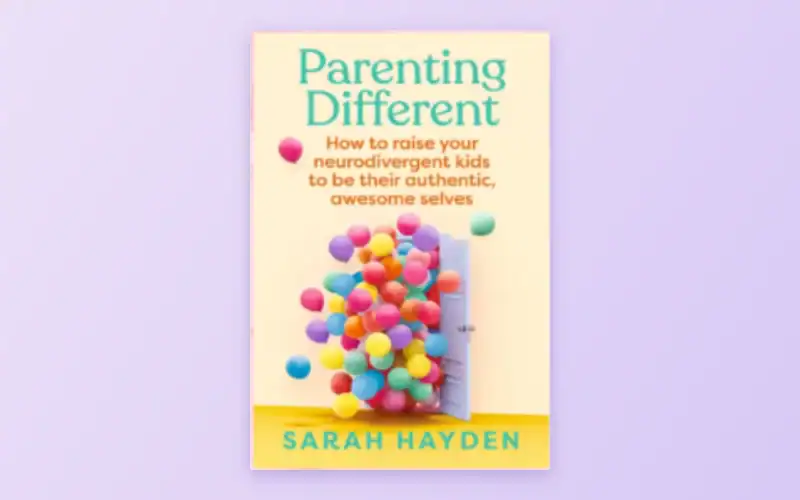
Parenting Different by Sarah Hayden is the book that sits down beside you in that loneliness and says: I’ve been here too. Let me show you what I’ve learned.
Why this book is different
What sets this book apart from so many parenting guides on the shelf is that Sarah Hayden isn’t writing from the outside looking in. She’s a mum who walked the diagnosis journey with her daughter — and later herself. She knows what it feels like to sit in that paediatrician’s office. She knows the grief that can come tangled up with relief when a diagnosis finally lands. She knows the 2am Google spirals and the guilt and the fierce protectiveness that rewires your entire identity as a parent.
But she’s also a professional. And it’s that blend — lived experience and professional insight woven together — that makes this book feel so different from the clinical, detached tone of so many resources. It doesn’t talk at you. It talks with you.
And at the heart of it all is a word that captures the spirit of this book perfectly: neurosparkly. Not broken. Not disordered. Not a problem to solve. Sparkly. Different in a way that deserves to be celebrated, understood, and supported — not fixed.
What the book covers
Parenting Different doesn’t just hand you a diagnosis and wish you luck. It walks beside you through the entire journey — from those first niggling feelings that something might be going on, all the way through to life beyond childhood.
It guides parents through early discovery — those moments when you start noticing that your child experiences the world differently, and you’re not sure yet whether to trust your instinct or wait. It walks you through the diagnosis process itself — the appointments, the assessments, the language, the waiting. It holds space for the emotional processing that comes after — the complicated tangle of relief, grief, anger, guilt, and fierce love that so many parents feel but rarely talk about.
And then it gets practical. School advocacy — how to communicate with teachers, how to navigate systems that weren’t designed with your child in mind, how to push back when you need to without burning out. Real-life examples that make you feel less alone. And crucially, it looks at life beyond childhood — because neurodivergent kids grow into neurodivergent adults, and the support doesn’t stop at eighteen.
The do’s and don’ts
One of the most-loved sections of this book — and the one we’ve shared most widely — is Hayden’s 7 Parenting Do’s and 7 Parenting Don’ts. They’re deceptively simple, but every single one carries weight.
Love what they love. Accept your child, quirks and all. Create a safe home. Prioritise their comfort over the opinions of others. Put their mental health above everything else. Understand their sensory world. Stand your ground with experts.
And on the flip side: don’t dismiss their interests. Don’t hide their diagnosis. Don’t be negative about their neurodivergence. Don’t make their story about you. Don’t trivialise their mental health. Don’t misinform them. Don’t stop learning.
They read like common sense. But in the thick of it — when you’re exhausted, when school is calling again, when a well-meaning relative suggests more discipline — they’re the reminders you need pinned to the fridge.
📚 From our Learning Library:
7 Do’s & 7 Don’ts for Parents →
What we love most
This book doesn’t ask you to do more. It asks you to see more clearly.
So much of parenting a neurodivergent child is spent in survival mode — putting out fires, managing meltdowns, filling in forms, advocating in meetings, Googling at midnight. Hayden gently pulls you out of that cycle and reminds you of the bigger picture. Your child isn’t a collection of challenges to manage. They’re a whole, complex, brilliant human being who experiences the world in a way that most people around them don’t fully understand.
Your job isn’t to make them fit. It’s to understand how they’re wired, build a world around them that supports who they actually are, and show them — every single day — that being different isn’t just okay. It’s something to celebrate.
There’s also something deeply validating about reading a book written by someone who has sat where you’re sitting. Hayden doesn’t pretend it’s easy. She doesn’t offer magic solutions. But she does offer something that’s harder to find and more valuable than any strategy: the feeling that you are not alone in this, and that what you’re doing — even on the hard days — matters more than you think.
Keep exploring — related from the Learning Library
The bottom line
You are not raising a problem to fix. You are raising a neurosparkly human to understand.
Parenting differently isn’t doing more. It’s seeing clearly. And this book helps you do exactly that — with warmth, with honesty, and with the kind of practical wisdom that only comes from someone who has lived it.
If you’re at the beginning of this journey, this book will be your compass. If you’re in the middle of it, it will be your exhale. And if you’re further along, it will remind you of how far you’ve come — and that you were never doing it wrong. You were doing it different. And different is exactly what your child needs. 🤍