Imagine a world where the lighting never flickered. Where social rules were explicit, logical, and never changed without warning. Where nobody expected you to make eye contact to prove you were paying attention. Where moving your body to help you think was not just tolerated, but encouraged.
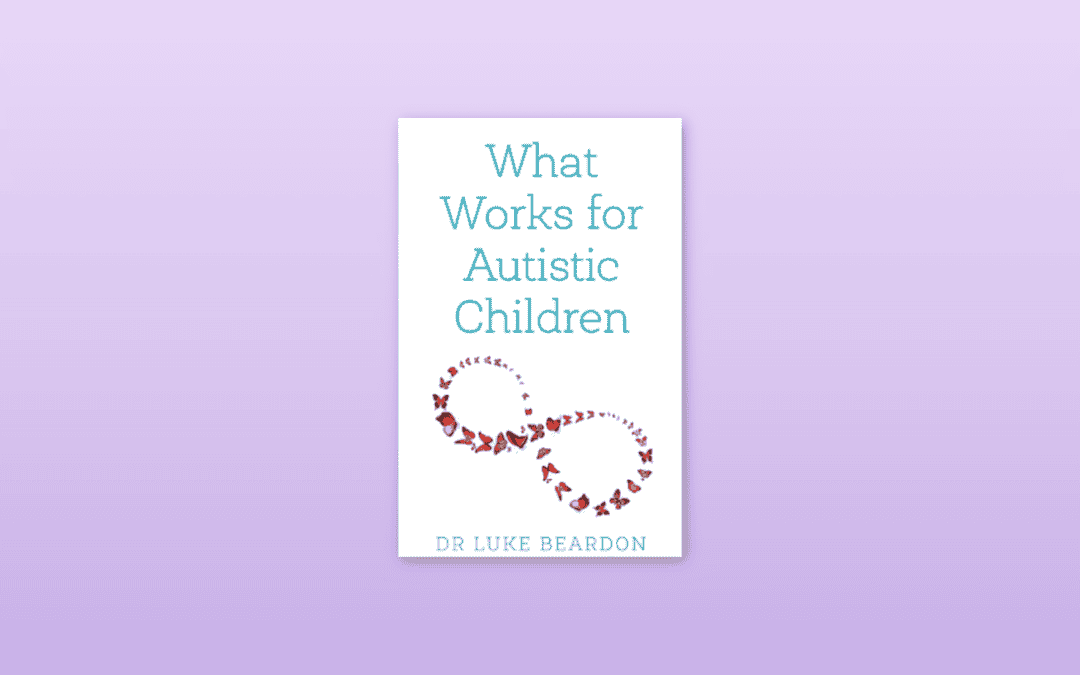
This is Autopia. It is a thought experiment introduced by Dr Luke Beardon in his book What Works for Autistic Children, and it might be the single most useful idea in the entire autism conversation.
Autopia is not a fantasy. It is a design question. What would the world look like if it had been built for autistic brains from the very beginning?
Why Autopia matters
Most conversations about autism start with the child. What is wrong with them? What do they struggle with? What interventions do they need? The entire framework assumes the child is the problem and the world is fine.
Autopia flips that completely. It asks: what if the world is the problem?
Think about it. A child who melts down in a supermarket is not reacting to nothing. They are reacting to fluorescent lighting, competing music tracks, crowds of unpredictable strangers, overwhelming smells, visual clutter on every shelf, and the constant low hum of refrigeration units. That is not a behaviour problem. That is a perfectly reasonable response to an environment that was never designed for how their brain processes sensory information.
In Autopia, that supermarket would not exist in its current form. The lighting would be natural or adjustable. The music would be optional. The layout would be predictable and clear. And nobody would look twice at a child who needed to cover their ears or take a break.
The point is not that we should rebuild every building. The point is that when we understand how much of the difficulty of autism is created by the environment, we stop blaming the child and start changing the world around them.
What Autopia looks like in schools
If schools were designed for autistic children, they would look very different. The day would be predictable, with visual timetables and advance warning of any changes. Classrooms would have quiet zones and sensory-friendly lighting. Instructions would be clear, direct, and free of sarcasm or implied meaning. Children would not be expected to sit still for hours to prove they were learning. Movement breaks would be built into every lesson.
Teachers would understand that a child looking away during a conversation might actually be listening more carefully. That a child repeating a question is not being rude but holding onto the words while searching for a response. That silence after an instruction does not mean defiance. It means processing.
Group work would be structured with clear roles. Transitions between activities would be signposted well in advance. And no child would ever be punished for a sensory response they could not control.
The remarkable thing is that none of these changes would harm neurotypical children. Predictable routines, clear communication, and sensory-friendly spaces benefit every child in the room. Autopia is not just better for autistic children. It is better for everyone.
What Autopia looks like at home
At home, Autopia means understanding that your child is not giving you a hard time. They are having a hard time. It means creating spaces where your child can decompress without judgement. It means recognising that a meltdown is not a tantrum. It is a nervous system that has been pushed past its capacity.
It means reducing demands when your child is already overwhelmed, rather than adding consequences on top of distress. It means speaking clearly, saying what you mean, and not expecting your child to read between the lines. It means accepting that your child might eat the same three foods for months, and that is not a battle you need to win today.
Autopia at home also means letting go of the idea that your child needs to look like everyone else to be okay. They do not need to enjoy parties if parties overwhelm them. They do not need a wide social circle if one trusted friend is enough. They do not need to perform happiness in ways you recognise for it to be real.
What Autopia looks like in public spaces
In Autopia, public spaces would be designed with sensory diversity in mind. Libraries would have truly quiet areas. Shopping centres would offer low-sensory hours as standard, not as a once-a-month special event. Restaurants would have menus with clear descriptions and not just clever names. Waiting rooms would have fidget tools and visual timers so children could see how long they needed to wait.
Public transport would have consistent, predictable signage. Events would publish sensory guides in advance. Healthcare settings would offer pre-visit walkthroughs so autistic children could know exactly what to expect before they arrived.
Again, every single one of these changes would make life easier for everyone, not just autistic people. Clearer signage helps tourists. Sensory guides help anxious children. Visual timers help anyone who struggles with uncertainty. Designing for autistic needs improves the world for all of us.
How to bring Autopia closer to reality
You do not need to redesign the world overnight. Autopia starts with small, intentional changes.
For parents: Create a calm-down space at home that is always available. Use visual schedules. Give advance warning before transitions. Reduce language when your child is overwhelmed. Trust their sensory experience even when you cannot see what is bothering them.
For teachers: Offer a quiet workspace option. Use clear, literal instructions. Build movement into the school day. Give processing time after questions. Stop interpreting sensory-seeking behaviour as disruption.
For everyone: When an autistic person is struggling in a space you designed or control, ask yourself: what could I change about the environment? Before you ask what is wrong with the person, ask what is wrong with the setting.
The bottom line
The problem was always the fit.
Every time we make a space more predictable,
more sensory-friendly, more accepting
of different ways of being,
we move a little closer to Autopia.
And Autopia is better for everyone.