You know the moment.
You’re talking, prompting, waiting… and the words just aren’t coming. You try again. Softer this time. “Tell me what you need.” And they look away. Or get frustrated. Or shut down completely.
Here’s the gentle truth: sometimes, spoken words are too fast, too fleeting, or too hard to access. They don’t need more language. They need something they can see.
What is Key Word Sign?
Key Word Sign is a way of supporting communication by using signs alongside speech. Instead of signing every word, we focus on the key words — the ones that carry meaning. You say the whole sentence, and sign the important parts.
It’s not a sign language. It’s a communication support that uses signs from Auslan, along with natural gesture, facial expression, and body language.
Why does it help?
For many children and adults, language can be hard to process or express. Adding signs:
- Makes language more visual and easier to understand
- Helps people get their message across
- Supports the development of speech, language, and communication
- Reduces frustration when words are hard to find
It doesn’t replace speech — it supports and strengthens it.
Who is it for?
Anyone.
Key Word Sign can support young children developing speech, school-aged children with ongoing communication needs, and adults with communication differences. And most importantly — it relies on the people around them. Parents, teachers, siblings, and peers all play a key role in modelling and using signs in everyday interactions.
How to use it
Use signs as you speak. Use them in routines, play, and everyday moments. Start small — one or two signs used often is enough. Communication grows through repetition, connection, and shared understanding.
A gentle reminder
You don’t need to do it perfectly. Consistent, everyday use is what makes the difference.
New to Key Word Sign? There’s an abundance of supportive resources, guides, and training available at kwsa.org.au to help you get started and build confidence. 🤍
Get started with us
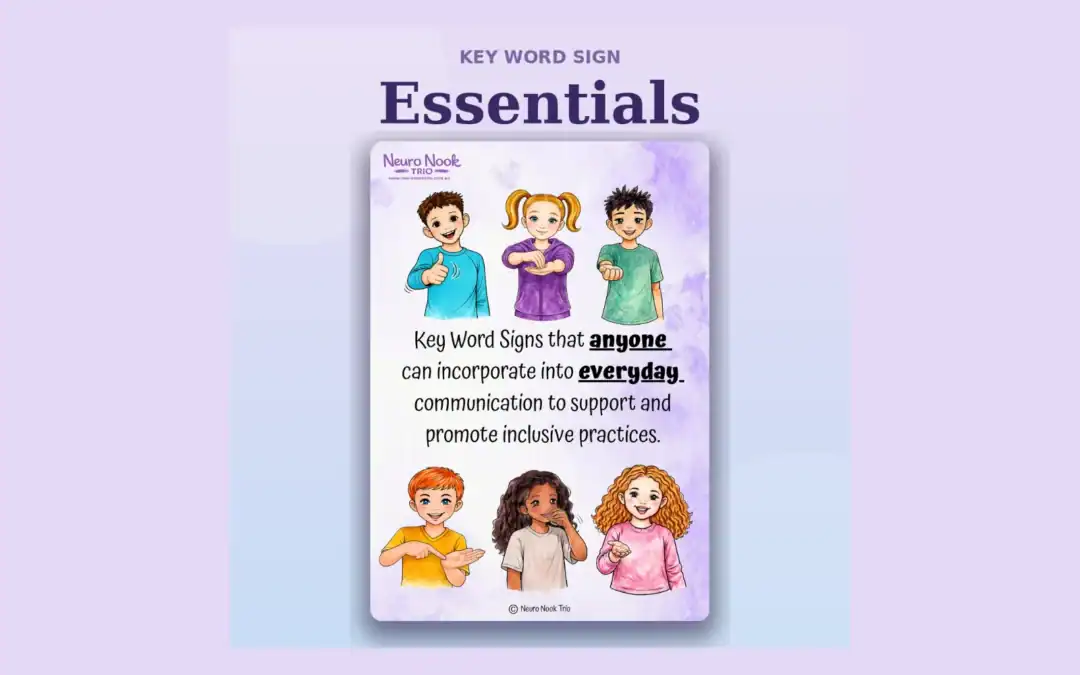
Our introductory set of 12 flashcards focuses on everyday, functional words like please, thank you, eat, and drink — the words children need most, right now. Simple. Practical. Ready to use.