
Toileting Isn’t Simple
Toileting is an ongoing challenge for our family, especially when it comes to participating in the community. Like many parents, we hope our neurodivergent child will become independent with self-care — but we also carry a quiet worry about the future and whether ongoing support will still be needed.
As they grow taller, heavier and stronger, changing in a small toilet cubicle — or even a standard accessible toilet — becomes incredibly difficult. These spaces aren’t designed for the kind of support some individuals need, particularly when it involves full changing, continence care or the use of a hoist.
What Is a Changing Places Facility?
Changing Places facilities are fully accessible bathrooms that go far beyond standard accessible toilets. They include an adult-sized change table, a ceiling hoist, and enough space for carers to assist safely and with dignity. These facilities exist across Australia in places like shopping centres, airports, hospitals, parks and public venues — but they’re not always easy to find.
The MLAK (Master Locksmiths Access Key)
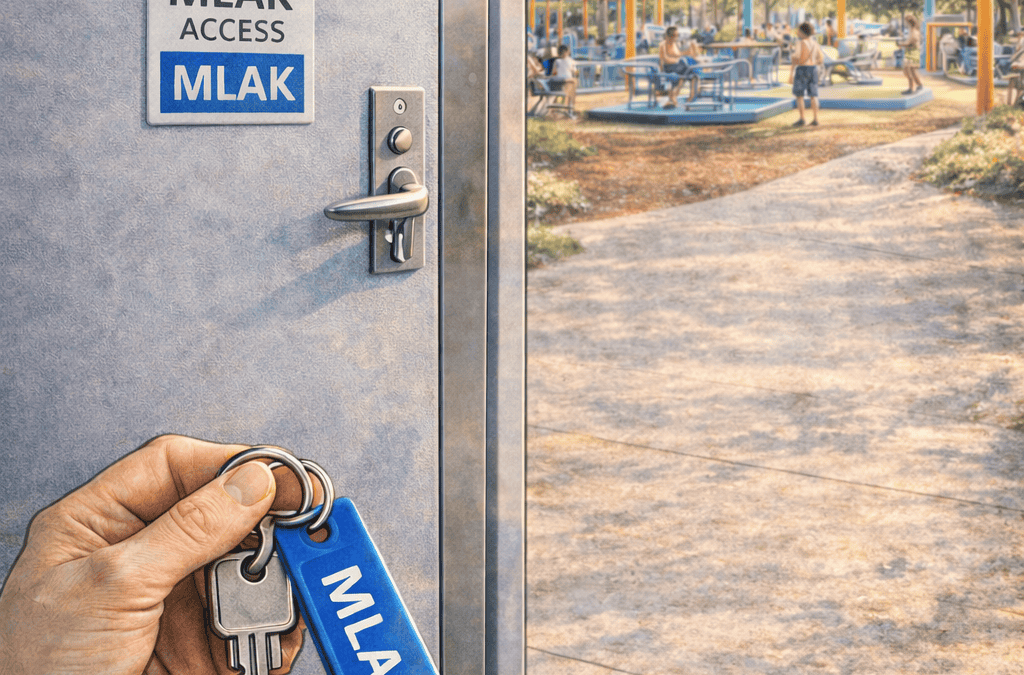
Many Changing Places and accessible facilities are locked to prevent misuse, and can be accessed using a Master Locksmiths Access Key (MLAK). This key opens thousands of accessible toilets and facilities across Australia. You can apply for an MLAK through the Master Locksmiths Access Key program — it’s a small step that opens up a lot of freedom.