
A Guide for Parents and Professionals
There’s a moment that most parents of ADHD kids know well. You’re sitting across from someone — a teacher, a family member, maybe even a professional — and they say something like “they just need to try harder” or “have you tried being more consistent?” And you smile. You nod. But inside, something deflates. Because you have tried. You’ve tried everything. And you know — deep in your gut — that what’s going on with your child isn’t about effort or discipline. It’s something else. Something bigger.
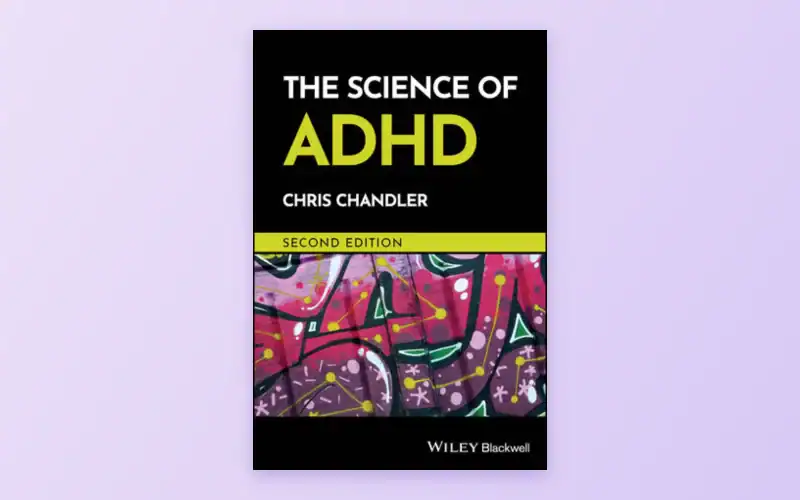
The Science of ADHD by Chris Chandler is the book that finally puts words — and science — behind that gut feeling.
Why this book matters
There are plenty of ADHD books out there. Some are heavy on theory. Some are full of strategies that sound great on paper but fall apart at 7:45am when shoes can’t be found and nobody has eaten breakfast. What makes Chandler’s book different is the way it bridges the two. It takes the real science — the genetics, the neuroscience, the psychology — and translates it into language that parents and professionals can actually use.
No jargon for the sake of jargon. No blame. No bias. Just clarity.
And that clarity matters more than most people realise. Because when you understand why your child’s brain does what it does, you stop fighting it. You stop blaming yourself. And you start working with it.
What the book covers
At its core, this is a book about how the ADHD brain actually works. Chandler walks through the neuroscience of attention, executive function, working memory, impulse control, and emotional regulation — not as abstract concepts, but as the real, lived experiences that shape a child’s day.
Why can your child hyperfocus on a game for three hours but can’t remember to brush their teeth? That’s not selective laziness. That’s how the brain’s attention system works when dopamine and reward are involved. Why are mornings a war zone? Because executive function — the brain’s ability to plan, sequence, prioritise, and initiate — is one of the areas most affected by ADHD, and mornings require every single one of those skills at once. Why do emotions feel so enormous? Because emotional regulation isn’t just a personality trait — it’s an executive function too. And in ADHD, it works differently.
Chandler doesn’t just describe these patterns. He explains the why behind them, grounded in research, and then connects the dots to what it looks like at home, at school, and in a child’s inner world.
📚 From our Learning Library:
What We’re Learning About ADHD… It’s Not Just About Attention →
The 6 Executive Functions & ADHD →
Dopamine, Reward & ADHD →
For parents: the book you wish you’d had sooner
If you’ve ever been told “they’ll grow out of it” — this book will feel like someone finally gets it.
One of the most powerful parts of this book for parents is the way it addresses co-occurring conditions. Chandler is clear: ADHD rarely exists on its own. Anxiety, ODD, sleep difficulties, sensory processing differences — they often travel together, layering on top of each other in ways that can make daily life feel impossibly complicated.
He also doesn’t shy away from the impact on the whole family. The exhaustion. The isolation. The guilt. The feeling that no one around you truly understands what it’s like to parent a child whose brain works this way. Reading those sections feels like exhaling for the first time in a long time.
But it’s not a heavy book. It’s a hopeful one. Because every chapter that explains a struggle also offers a way forward — not with quick fixes, but with understanding. And understanding, it turns out, changes everything.
For teachers: the difference between can’t and won’t
If you take one thing from this book into a classroom, let it be this: the child who can’t sit still isn’t choosing defiance. The one who forgets instructions seconds after hearing them isn’t being lazy. The one who blurts out answers isn’t trying to be rude.
Chandler explains these patterns through the lens of working memory, executive function, and attention circuits that genuinely operate differently in ADHD. And once you see that distinction — between can’t and won’t — it changes the way you respond to every child in your room.
There’s also a powerful thread throughout the book about identification. Teachers are often the first to notice the signs — sometimes years before a formal assessment. Chandler reminds us that those observations matter. He explains how ADHD presents differently in every child, why some (particularly girls, and children who internalise rather than externalise) are missed entirely, and how traditional assessments can overlook the quieter, less stereotypical presentations.
The more we understand, the better we can advocate. And sometimes advocacy starts with a teacher who notices something and says, gently, “I think there might be more going on here.”
What we love most
This book doesn’t pathologise. It doesn’t catastrophise. It simply says: here is how this brain works. Here is what the science tells us. And here is how that knowledge can help you support the child in front of you — whether that’s at the kitchen table or in a classroom of thirty.
It’s the kind of book you read once for yourself, and then want to hand to everyone around your child. The grandparent who thinks more discipline is the answer. The teacher who’s never had training in neurodevelopmental differences. The friend who means well but doesn’t quite get it.
Knowledge brings clarity. And clarity is one of the most powerful things you can give a parent who has been running on fumes and self-doubt.
Keep exploring — related from the Learning Library
What We’re Learning About ADHD… It’s Not Just About Attention
Key Idea: ADHD isn’t just about attention — it’s about executive function, and what looks like “bad behaviour” is really a skill gap that needs support.
The 6 Executive Functions & ADHD
Key Idea: ADHD is shaped by six executive functions — activation, focus, effort, emotion, memory, and action — and understanding them changes everything.
Dopamine, Reward & ADHD
Key Idea: The ADHD brain’s reward system is wired differently — it craves more, discounts later, and explains the screen battles, impulsivity, and thrill-seeking.
The bottom line
Your child isn’t broken. You’re not failing. And there is a way through this that doesn’t require anyone to be someone they’re not.
The Science of ADHD won’t give you a script for every difficult moment. But it will give you something better: a deep, science-backed understanding of why those moments happen — and the confidence to trust that your child isn’t broken, you’re not failing, and there is a way through this that doesn’t require anyone to be someone they’re not. 🤍