
How do we experience the world through our senses?
Our brains constantly take in information from our senses — sounds, textures, smells, movement, light. Most of the time we don’t even notice it happening. But for some individuals, processing this sensory input can be challenging. This is known as sensory processing differences, and understanding them can change the way we support the neurodivergent and neurosensitive people in our lives.
When it comes to sensory processing, there are two broad patterns you’ll often hear about: sensory seeking and sensory avoiding. Let’s break them down.
What is sensory seeking?
Sensory seeking happens when an individual needs more sensory input to feel regulated and balanced. The nervous system is looking for extra stimulation.
Sensory seeking may look like:
- Constant movement
- Touching everything within reach
- Making loud noises
- Enjoying noisy environments
- Enjoying strong flavours or intense sensations
These behaviours help the body wake up and regulate. The child spinning in circles at the park, the one who crashes into the couch over and over, the kid who needs to touch everything in the shop — their nervous system is asking for more input. It’s not naughty. It’s a need.
What is sensory avoiding?
Sensory avoiding happens when an individual feels overwhelmed by sensory input. The nervous system is trying to reduce stimulation to feel safe and calm.
Sensory avoiding may look like:
- Covering ears in loud places
- Avoiding certain clothing textures
- Disliking crowded or busy environments
- Being sensitive to food textures
These behaviours help protect from overload. The child who refuses to wear socks with seams, the one who can’t handle the noise of a school assembly, the kid who gags at certain foods — their nervous system is saying that’s too much. It’s not fussiness. It’s protection.
Can we be both?
Yes! Many individuals are sensory seekers in some areas and sensory avoiders in others. A child might crave intense movement and deep pressure but become completely overwhelmed by loud sounds or bright lights. Everyone’s sensory profile is unique.
Understanding sensory needs helps create more supportive, inclusive environments for neurodivergent and neurosensitive individuals. Because sensory behaviours are communication.
Supporting regulation through play
One of the most beautiful ways to support sensory needs is through play. Move. Squeeze. Bounce. Stretch. Simple, playful activities can help a child’s nervous system find its balance — and they’re things you can do together at home, right now.
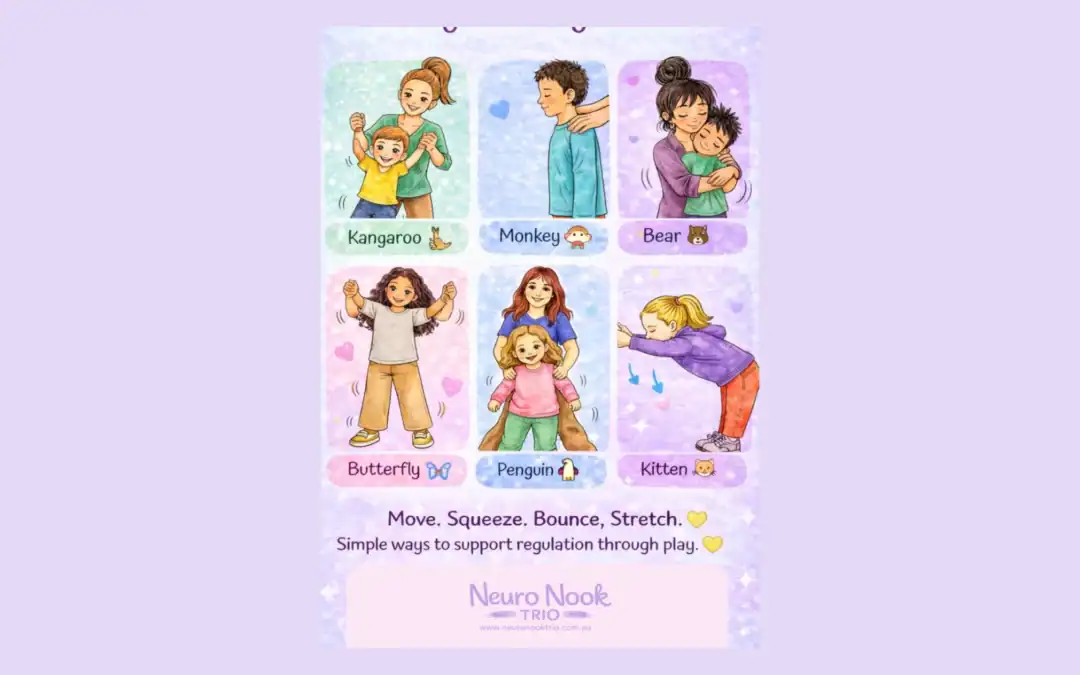
Here are six animal-themed sensory activities to try:
Kangaroo Bounce
Hold your child under their arms or by the hands and help them bounce up and down. “Boing, boing! Kangaroo Bounce!”
Monkey Squeeze
Place your hands on your child’s upper back or shoulders. Give slow, firm squeezes and continue down to their arms and hands. “The monkey is giving a gentle squeeze!”
Sleepy Bear Hug
Gently wrap your arms around your child in a big bear hug and slowly rock side to side. “Hug my sleepy bear!”
Butterfly Flap
Stand facing your child and hold their hands or wrists. Gently move their arms up and down. “Flap your butterfly wings!”
Penguin Waddle
Stand behind your child and place your hands on their shoulders or hips. Guide them to waddle side to side while walking. “Waddle, waddle — penguins on the ice!”
Kitten Stretch
Stand facing your child and hold their hands. Gently guide their arms up high, then help them bend forward slightly. “Stretch little kitten. Stretch, stretch.”
These aren’t just cute games — they’re providing proprioceptive and vestibular input that helps the nervous system regulate. Deep pressure, rhythmic movement, stretching and squeezing all send calming signals to the brain. And wrapping it in play means your child gets the input they need while feeling safe, connected, and loved. 🤍
Printable Sensory Resources
We’ve created three themed sets of sensory exercises you can download and use at home or in the classroom. Ready to print and try today.