
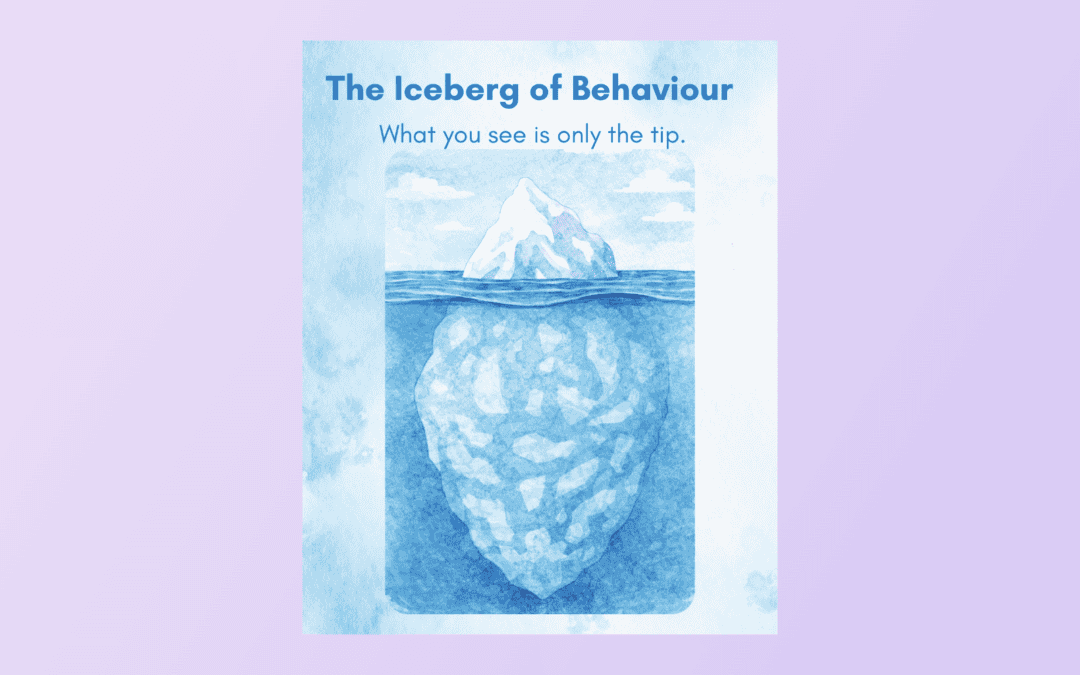
Inspired by Mona Delahooke’s “Beyond Behaviours”
When a child melts down, shuts down, or pushes back, it’s easy to focus on what we can see — the yelling, the hitting, the refusing, the tears. But behaviour is just the tip of the iceberg. Underneath the surface, so much more is going on.
What we see
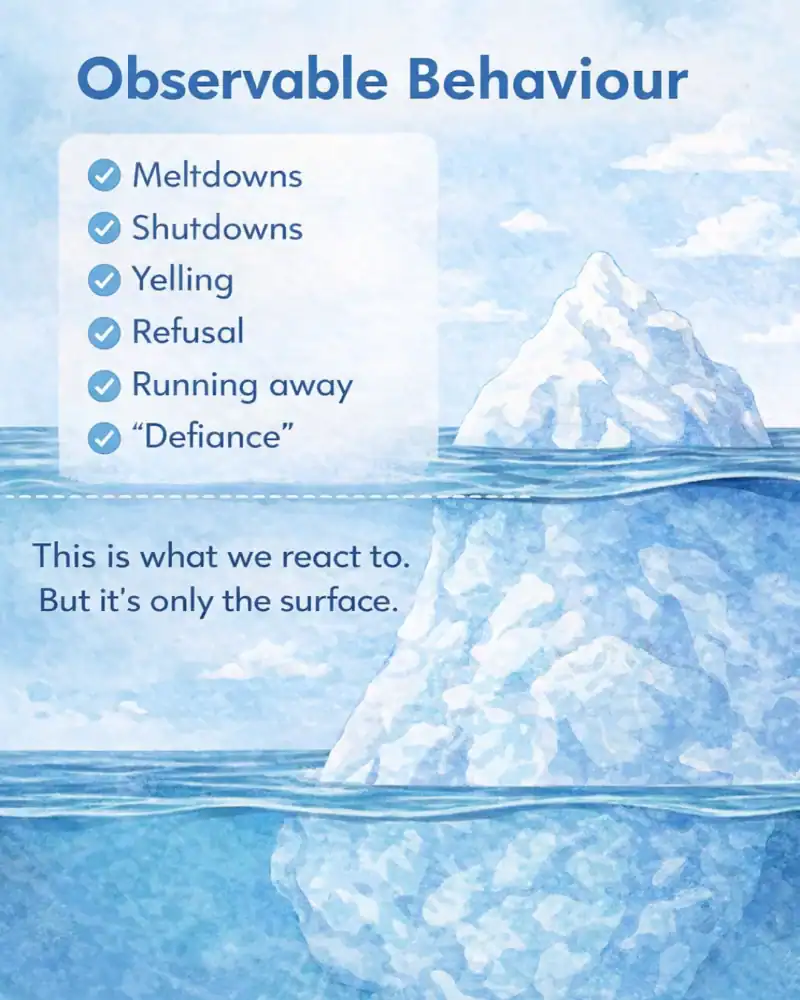
The behaviours that get our attention are the ones on the surface:
- Meltdowns and big emotions
- Shutting down or running away
- Hitting, kicking, throwing
- Refusing, arguing, ignoring
- Zoning out or “switching off”
These are the moments that often feel the hardest — and the ones we’re quickest to label as naughty, defiant, or attention-seeking.
What’s underneath
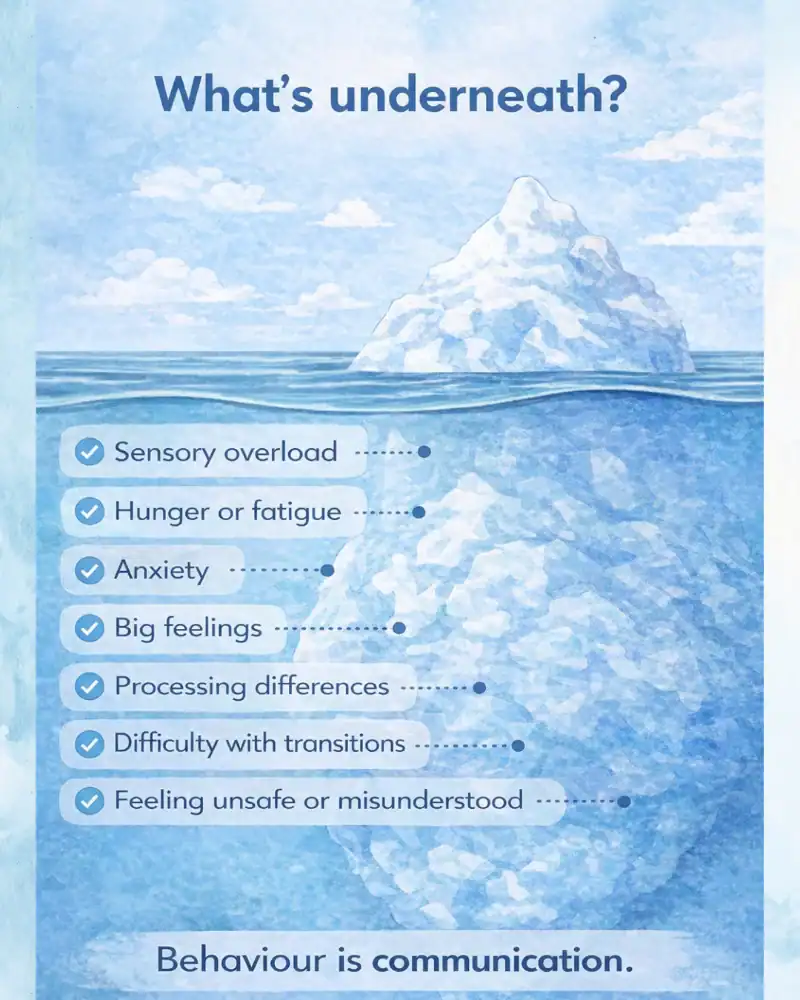
Below the surface is where the real story lives. Behaviours are signals from a child’s nervous system — not choices they’re making to make our day harder.
- A nervous system that feels unsafe or overwhelmed
- Sensory overload or under-stimulation
- Hunger, tiredness, illness
- Big feelings they can’t yet name
- Skills still developing — language, regulation, flexibility
- Past experiences shaping how safe the world feels
Behaviour is communication. What looks like “misbehaviour” is often a child telling us: I can’t cope right now.
Support the nervous system first
Before we can teach, reason, or problem-solve, a child’s body needs to feel safe. A dysregulated nervous system cannot learn. Co-regulation — our calm becoming their calm — is the starting point.
This might look like slowing down, softening our voice, getting down to their level, offering a cuddle, or simply being a steady presence beside them.
A new way to respond
Instead of asking “How do I stop this behaviour?”, try asking:
- What is my child’s body telling me right now?
- What do they need to feel safe?
- What’s underneath the tip of the iceberg?
These questions shift us from managing behaviour to understanding the child — and that’s where real change begins.
Why it matters
When we look beyond the behaviour, we stop seeing a “difficult child” and start seeing a child having a hard time. That shift changes everything — how we respond, how they feel seen, and how we build the connection their nervous system needs to grow.
The next time you see big behaviour, take a breath and remember: what you see is only the tip. The most important part of the story is under the water. 🤍